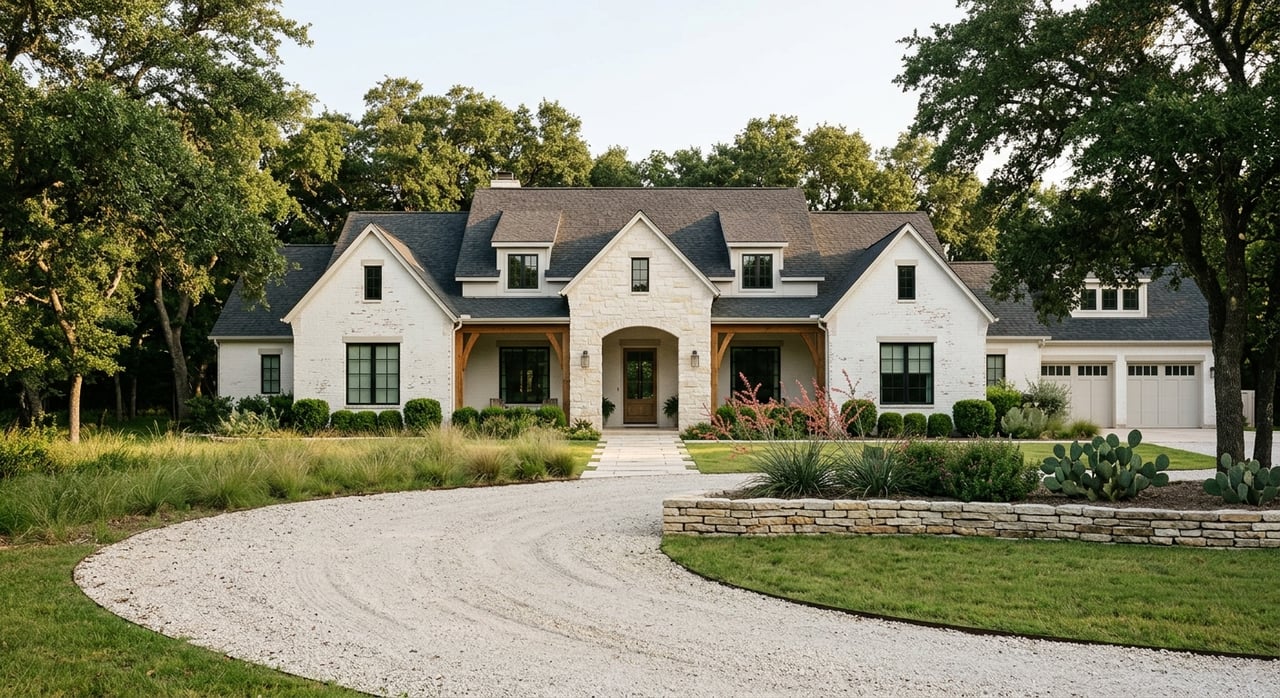
Buying a few acres near Boerne can feel like the perfect Hill Country move, until you realize the land itself is only part of the decision. What looks simple on paper can involve access permits, septic approvals, water questions, deed restrictions, and tax-status issues that shape what you can actually do with the property. If you are thinking about a small acreage purchase in Kendall County, this guide will help you focus on the details that matter most before you buy. Let’s dive in.
Start With the Rules That Apply
One of the biggest misconceptions about small acreage near Boerne is that “no zoning” means “no rules.” In unincorporated Kendall County, the county states that it does not regulate land use or have zoning, but it still oversees important items like access and driveways, on-site sewage facilities, floodplain work, dark-sky lighting, subdivision platting, and property division, according to Kendall County permitting guidance.
That means you should look beyond the listing description and ask what approvals the tract may need for your plans. If the property is inside Boerne city limits or within the ETJ, municipal requirements may also apply. A tract can feel rural and still fall under additional rules depending on its exact location.
Check Deed Restrictions Early
Outside city zoning, recorded deed restrictions often become the real guardrails for how a property can be used. Kendall County notes that restrictions in unincorporated areas are recorded on the deed and should be checked with the County Clerk, as explained in the county’s permitting and zoning overview.
This is where buyers can get surprised. A property may be outside city zoning but still limited by recorded covenants, HOA rules, building standards, or access easements. Before you move forward, make sure you understand whether the tract allows the home type, outbuildings, animals, fencing, or other uses you have in mind.
Confirm Legal Access and Driveway Needs
Access is one of the first practical issues to verify because it affects both usability and permitting. Kendall County states that a driveway connecting to a public county road requires an access permit, while frontage on a private road no longer requires that permit, though an address request is still required. If the tract fronts a state highway, access must go through TxDOT, per the county’s Access/Driveway Permit page.
The county also says a 911 address must be assigned before development, septic, or well permits are pursued. That sounds small, but it can affect your timeline in a real way. If you are comparing multiple tracts, access details can quickly separate a straightforward property from one with extra hurdles.
Water and Septic Can Make or Break the Deal
For many small acreage buyers near Boerne, the biggest questions are simple: How will you get water, and how will wastewater be handled? These are not items to assume from neighboring properties. They need to be evaluated tract by tract.
Understand Septic Requirements
In Kendall County, on-site sewage facilities require permitting, and the county says an OSSF permit must be obtained before construction. The Texas Commission on Environmental Quality oversees these systems, and Kendall County notes that it will approve or deny an application within 30 days of receiving it.
There are also practical details buyers should know. The county’s septic application materials state that authorization to construct expires if the installer does not request a construction inspection within one year. For aerobic systems, an affidavit to the public must be recorded with the County Clerk, and a maintenance contract is required.
County fees are only part of the picture. Kendall County’s fee schedule lists residential OSSF permits at $300 for systems under 500 gpd and $600 for systems at 500 gpd or above. Installation costs are separate, and recent cost guidance from Forbes Home estimates septic installation averages about $6,300, with typical costs ranging from $3,600 to $10,000 and engineered systems potentially reaching $10,000 to $20,000.
Evaluate Well Feasibility Carefully
Water availability is another area where assumptions can get expensive. Kendall County is covered by the Cow Creek Groundwater Conservation District, which regulates wells. Its rules state that existing wells must be registered with the district or obtain an operating permit, and the district may inspect wells during registration, drilling, and completion, according to the district rules.
Just as important, the district makes no representation about water availability or quality. In plain terms, that means a neighboring well is not a guarantee for your tract. Well feasibility needs to be checked specifically for the parcel you are buying.
If the property falls within an aquifer-related regulatory area, that may add another layer of review. The Edwards Aquifer Authority includes a Boerne quadrangle in its regulatory zone maps, so it is smart to verify the exact parcel against the map layers rather than rely on a mailing address.
Budget for More Than the Purchase Price
Raw or lightly improved land can look attractive at first glance, but the true cost to make it usable often includes several separate line items. Government fees are only the starting point. You may also need to budget for surveying, testing, driveway work, water access, septic installation, clearing, and fencing.
Here is a simple snapshot of some published costs and fees buyers often encounter:
| Item | Published Cost or Fee |
|---|---|
| County residential access permit | $100 |
| Address request or verification permit | $100 |
| Residential septic permit under 500 gpd | $300 |
| Residential septic permit 500 gpd or above | $600 |
| Floodplain minor residential permit | $200 |
| Floodplain major residential permit | $300 |
| Typical well drilling cost | Average $5,625 |
| Typical septic installation cost | Average $6,300 |
| Perc test | About $450 to $1,400 |
| Land survey | About $330 to $900 |
The permit figures come from the Kendall County fee schedule. The improvement estimates come from Forbes Home cost guides.
Other site-work costs can add up fast too. Forbes Home estimates gravel driveways at roughly $300 to $4,500 for many projects, land clearing at about $1,300 to $5,200 in typical cases, and wood fencing at about $5 to $20 per linear foot installed. On small acreage, those “extras” often become core parts of the budget.
Look Closely at Ag Valuation
If a tract is being marketed with an agricultural valuation, make sure you understand what that really means. Texas open-space appraisal under 1-d-1 is not automatic just because land is rural or has a few animals on it. The Texas Comptroller says the land must be currently devoted principally to agricultural use to the degree of intensity generally accepted in the area, must have been used principally for agriculture or timber production for five of the preceding seven years, and requires a valid application.
For local context, the Kendall County ag-use manual notes that casual uses like a backyard vegetable garden do not qualify. It also gives examples of local intensity standards, including typical examples around 10 acres for cow/calf, stocker or feeder cattle, sheep, goats, horses, and exotics, while beekeeping can qualify on 5 to 20 acres with at least six hives.
Ask Whether the Use Can Continue
This is the question many buyers miss. It is not enough to know that the seller has an ag valuation today. You also need to ask whether your post-closing use will realistically support continued qualification.
The Comptroller states that if agricultural land changes to a non-agricultural use, rollback tax is due for the previous three years plus interest for land under Subchapter C or 1-d. If your plan is to build, reduce grazing, or shift the property to a more residential use, that tax exposure should be part of your decision-making.
Buildability Depends on the Whole Package
When you buy small acreage near Boerne, acreage size alone does not tell you whether the property is the right fit. A tract may look ideal, but the practical questions are what determine whether it works for your budget and your goals.
Before you commit, focus on the full picture:
- Is access legal and permit-ready?
- Has the 911 address process been started or completed?
- Will the property need a well, and has feasibility been evaluated?
- What type of septic system is likely required?
- Are there floodplain considerations?
- Are there deed restrictions, HOA rules, or easements?
- Is the current ag valuation likely to continue after closing?
- What site-work costs will be needed before the property feels livable?
Those answers can help you compare land more confidently and avoid expensive surprises after closing.
Why Local Guidance Matters
Small acreage purchases often involve more moving parts than a typical home purchase. You are not only evaluating the land itself. You are also weighing county processes, utility realities, recorded restrictions, and the real cost of turning a tract into a property that fits your plans.
That is where local, detail-oriented guidance can make a real difference. If you are considering small acreage near Boerne, Harkin Realty can help you evaluate the practical side of a property so you can move forward with more clarity and confidence.
FAQs
What should you check first before buying small acreage near Boerne?
- Start by confirming legal access, deed restrictions, addressing requirements, water options, septic feasibility, and whether the property is in unincorporated Kendall County, Boerne city limits, or an ETJ.
Does Kendall County zoning apply to small acreage near Boerne?
- In unincorporated Kendall County, the county says it does not regulate land use or have zoning, but permits and recorded deed restrictions can still affect what you can do on the property.
Do you need a permit for a driveway on small acreage in Kendall County?
- Yes, Kendall County states that a driveway connecting to a public county road requires an access permit, while private-road frontage does not require that permit, though an address request is still required.
Can you assume a well will work on acreage near Boerne if nearby properties have one?
- No, the Cow Creek Groundwater Conservation District says it makes no representation about water availability or quality, so well feasibility should be evaluated for the specific tract.
How does septic approval work for small acreage in Kendall County?
- An on-site sewage facility permit is required before construction, and Kendall County says it will approve or deny an application within 30 days of receiving it.
Does a small acreage property automatically qualify for ag valuation in Kendall County?
- No, Texas open-space appraisal is not automatic, and the land must meet use, history, intensity, and application requirements under state and local guidance.
What happens if ag-use land near Boerne changes to a non-agricultural use?
- The Texas Comptroller says a rollback tax for the previous three years, plus interest, may be due if qualifying agricultural land changes to a non-agricultural use.